Listen to the Podcast episode here: Click Me!
In March of 2017, Congress passed the Allow States and Victims to Fight Online Sex Trafficking Act, otherwise known as FOSTA. In April of 2018, the Stop Enabling Sex Traffickers Act was added on, and FOSTA-SESTA currently stands as a law to combat sex tracking, but in turn harms sex workers. SESTA in particular holds sites accountable for content posted on their servers, which led to the censorship and removal of outlets for sex workers.
In a press release, New York Representative Carolyn Maloney said, “For too long, websites like Backpage.com, which actively facilitate advertising on their platforms for sex with trafficking victims and children, have been able to escape accountability. FOSTA will make it clear that internet companies that facilitate sex trafficking are not shielded by federal law.”
Because of this bill that was originally intended to combat child trafficking, websites such as Reddit, Craigslist, and Tumblr that were once a safe platform for sex workers began shutting down communities and pages that enabled their work.
So, what exactly is the issue with a bill that limits sex workers ability to… you know… work?
Okay, so I basically gave you the answer right there. This bill puts further limitations on sex worker’s ability to work, and nearly diminishes their chances of working safely.
For activists who oppose sex work due to their beliefs that it is inherently exploitative, it is purely good news that these communities are being shut down, because they MUST be just as exploitative if they’re enabling dehumanizing work.
Gloria Steinem has long been hailed as the world’s most well known feminist, but in more recent years has been criticized for non inclusive feminism. Steinem has long been against the decriminalization of sex work and says, “Prostitution is not the oldest profession, it is the oldest oppression.” But more recent, more inclusive sanctions of feminism are sex work positive. They fight for the right to utilize their bodies for money and argue that retracting access to certain communities doesn’t protect anyone. FOSTA-SESTA only makes sex work less safe.
Some feminists view all forms of sex work as explotative, but Alana Massey says, “The very website that FOSTA criminalizes are where I found the generous communities and actionable advice I needed to get out of and avoid exploitative sex work situations.”
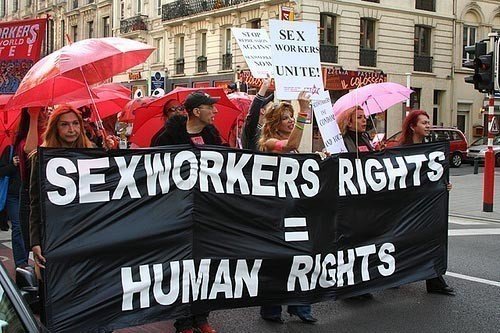
The fight to decriminalize sex work is actually an incredibly feminist battle considering one of the most basic principles of feminism is giving everyone, especially women, trans people, and non binary people control over their own bodies. Decriminalized sex work is simply a fight for bodily autonomy. When sex workers are truly given the ability to put their work into their own hands at their own terms, they are in turn allotted the freedom to safely navigate their profession.
Without sex work being decriminalized, workers are subject to not reaching financial stability for a number of reasons. As the law currently stands, sex workers can be fined or serve jail time if they’re caught. When they are fined, their only means of paying their fine is… that’s right… more sex work! And more sex work, while it remains illegal, equals more eventual arrests. And with a criminal record, workers can be denied work in other fields and they can also be denied housing. Keeping sex work illegal does nothing but put sex workers at risk to remain impoverished, as well as make them subject to further abuse and zero protection.
With limitations like FOSTA-SESTA, sex workers are forced to look into more compromising outlets and situations. Without decriminalization, sex workers don’t have the ability to report abuse in their field. Calling the police when they’re in a dangerous situation with a client will only result in their own arrest, or oftentimes results in abuse inflicted by a police officer. In a 2008 study, nearly one in five sex workers said they had been made to perform sexual favors for a police officer to avoid being charged with prostitution.
So, FOSTA-SESTA was officially put into place in 2018. What does sex work legislation look like now, in 2020? Pretty much the same. In June of 2019, a group of New York legislators introduced a bill to decriminalize sex work. The bill would have repealed the ban on sex work, but it unfortunately wasn’t passed, and is unlikely to pass in the future. Though FOSTA-SESTA still acts as a major obstacle for sex workers, the introduction of this bill is still a big win because sex workers are finally part of a conversation about themselves.
 Brenna Does Music
Leave a comment